
Beauty, Ritual & the Art of Living Well
There is a quiet belief many of us absorbed somewhere along the way: that beauty is something you arrive at later. After the work is done. After the money is made. After the house is finished, the children are grown, the season finally slows. That the beautiful life is waiting somewhere in the future — on the other side of everything still unfinished.
But a life is not lived in the future. It is lived on ordinary mornings. In the way you make your coffee. In whether you notice the light. In whether you let yourself have the good cup, or save it for a guest who may never come.
The art of living well is not a reward for a life well-managed. It is a way of being present to the life you already have.
At StormLife, we call this everyday sovereignty — beauty and ritual practiced not as luxury, but as devotion. And unlike so much of what we write about here, it asks nothing of you but attention. No journey required. No permission. You can begin this morning.
Beauty Is Not the Same as Luxury
These two words are often used as though they mean the same thing. They do not.
Luxury is frequently about the price of a thing, or about who can see it. Beauty is about attention. A single stem in a jam jar on the windowsill can hold more beauty than an expensive arrangement no one ever looks at.
This distinction matters, because it means beauty is not reserved for the woman with more money. Beauty is not bought. It is noticed. It asks for presence, not budget. And that places it within reach of any woman, on any ordinary day.
Ritual Gives the Ordinary Meaning
The difference between a habit and a ritual is not the action. It is the attention.
Two women can make the same cup of tea. One does it while thinking about the next thing — the tea is fuel, barely tasted. The other does it while being there for it: the warmth of the cup, the first quiet sip, the small pause before the day begins.
The tea is identical. The experience is entirely different.
A ritual is how we tell ourselves that this moment matters — and, quietly, that we matter. You do not need more time to live ritually. You only need to be present for the time you already have.
The Slow Morning
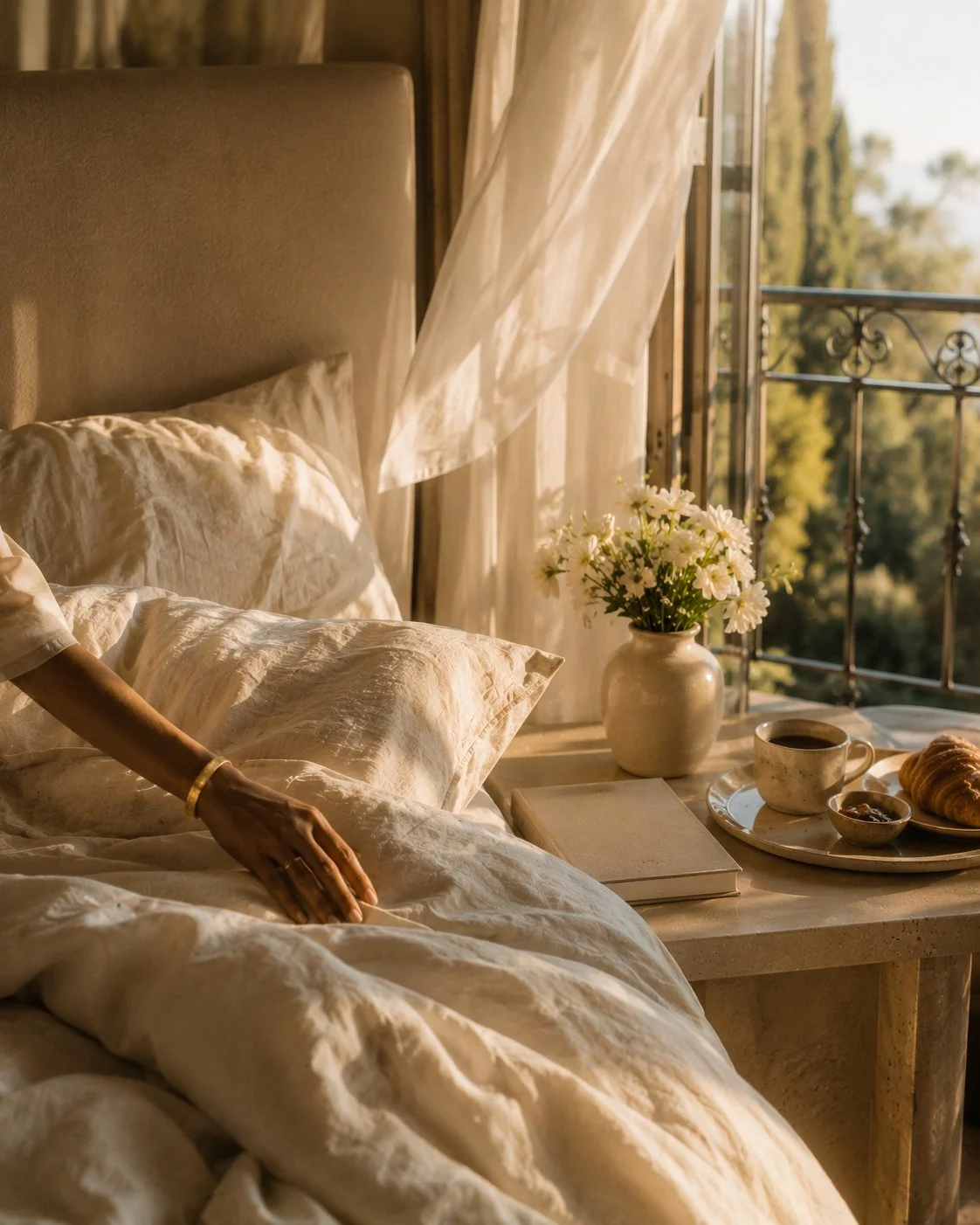
How you begin the day tends to become how you continue it. A morning entered through a screen — other people's news, other people's needs, other people's urgency — becomes a day spent reacting.
A slow morning is not about waking before dawn to optimise yourself. It is about claiming a small, unhurried stretch of time that belongs to you before the world enters. Light. Warmth. Something in your hands. A few minutes that are not yet about anyone else.
It can be ten minutes. Sovereignty is often built in small amounts of protected time.
Fresh Flowers as Self-Devotion
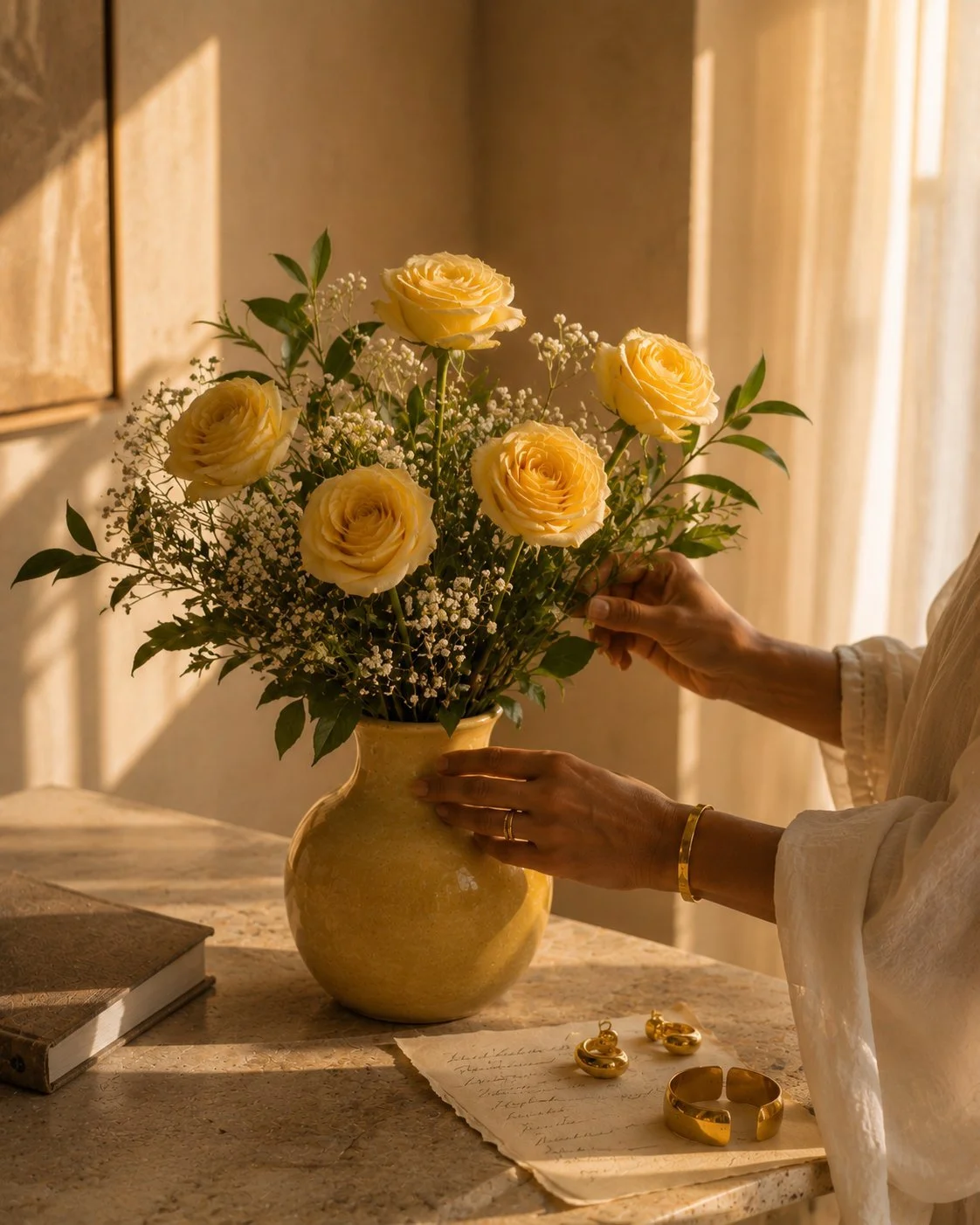
Buying yourself flowers, for no reason at all — not for a party, not for guests, not because someone sent them — is one of the smallest and most quietly radical acts of self-devotion.
It says: I am worth beauty on an ordinary Tuesday.
So much of a woman's beauty arrives as something given to her, by someone else, on an occasion deemed worthy. To buy yourself the flowers is to stop waiting to be given them. It is a small rehearsal of a much larger sovereignty: the willingness to give yourself what you have been waiting to receive.
Scent as Memory
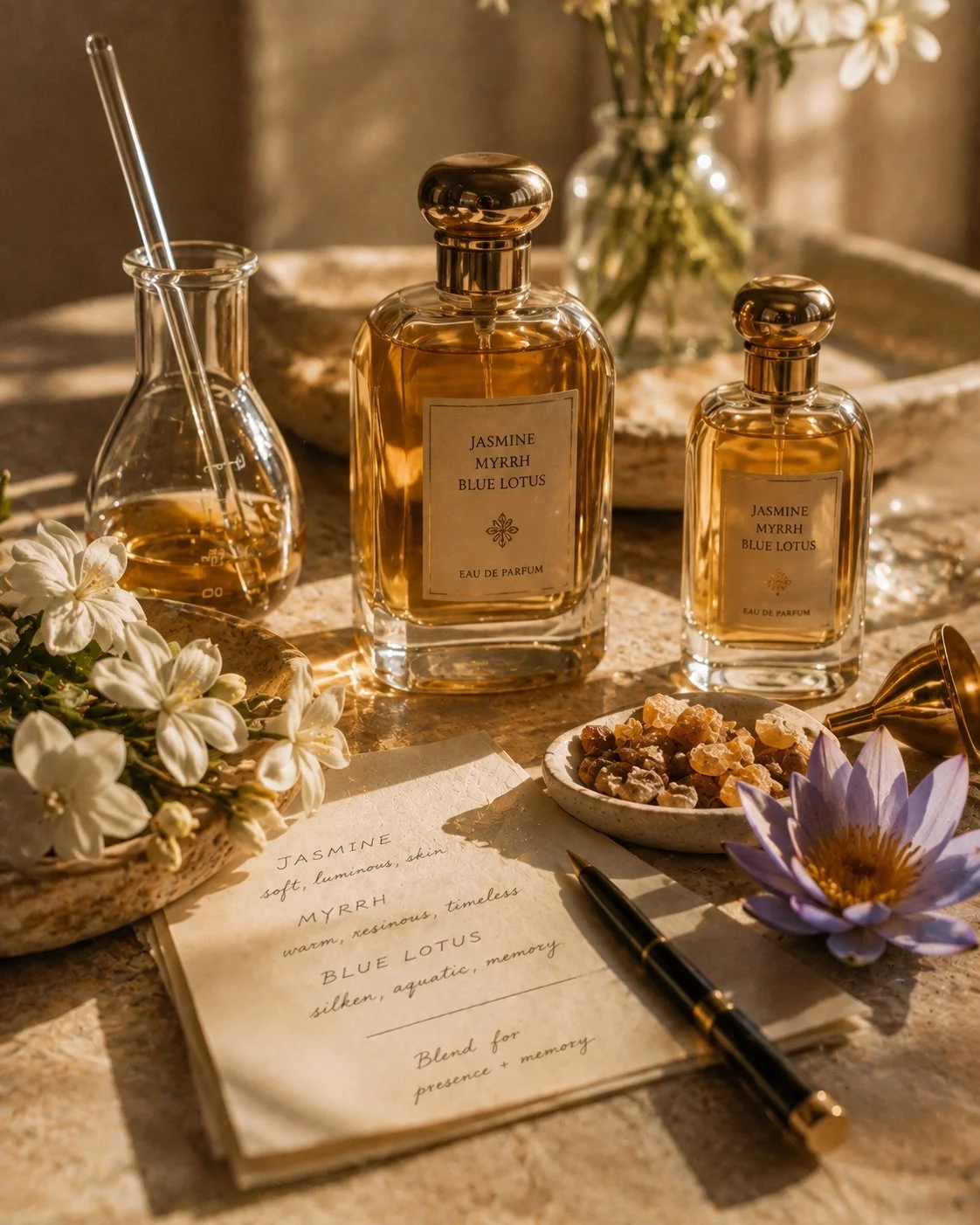
Of all the senses, scent moves most directly. It bypasses thought and goes straight to memory — a single note can return you to a room, a season, a version of yourself.
This is why scent is not vanity. It is an anchor. A perfume worn on an ordinary day, oil on the wrists, a candle lit while you work — these are threads you can follow back to yourself.
A signature scent becomes a small ceremony of return. Not to impress anyone in the room. Simply to remind yourself who is moving through it.
Dress for Yourself First
Most of us learned to dress as a message to other people. Appropriate. Professional. Unremarkable enough not to draw comment.
There is a quiet sovereignty in dressing, first, for the woman in the mirror.
Wearing the good thing without an occasion. Keeping the beautiful robe in use rather than in the wardrobe. Choosing what you love rather than what disappears. The occasion is that you are alive today.
You are not dressing to be seen. You are dressing to remember that you are here.
Set the Table Before Anyone Arrives
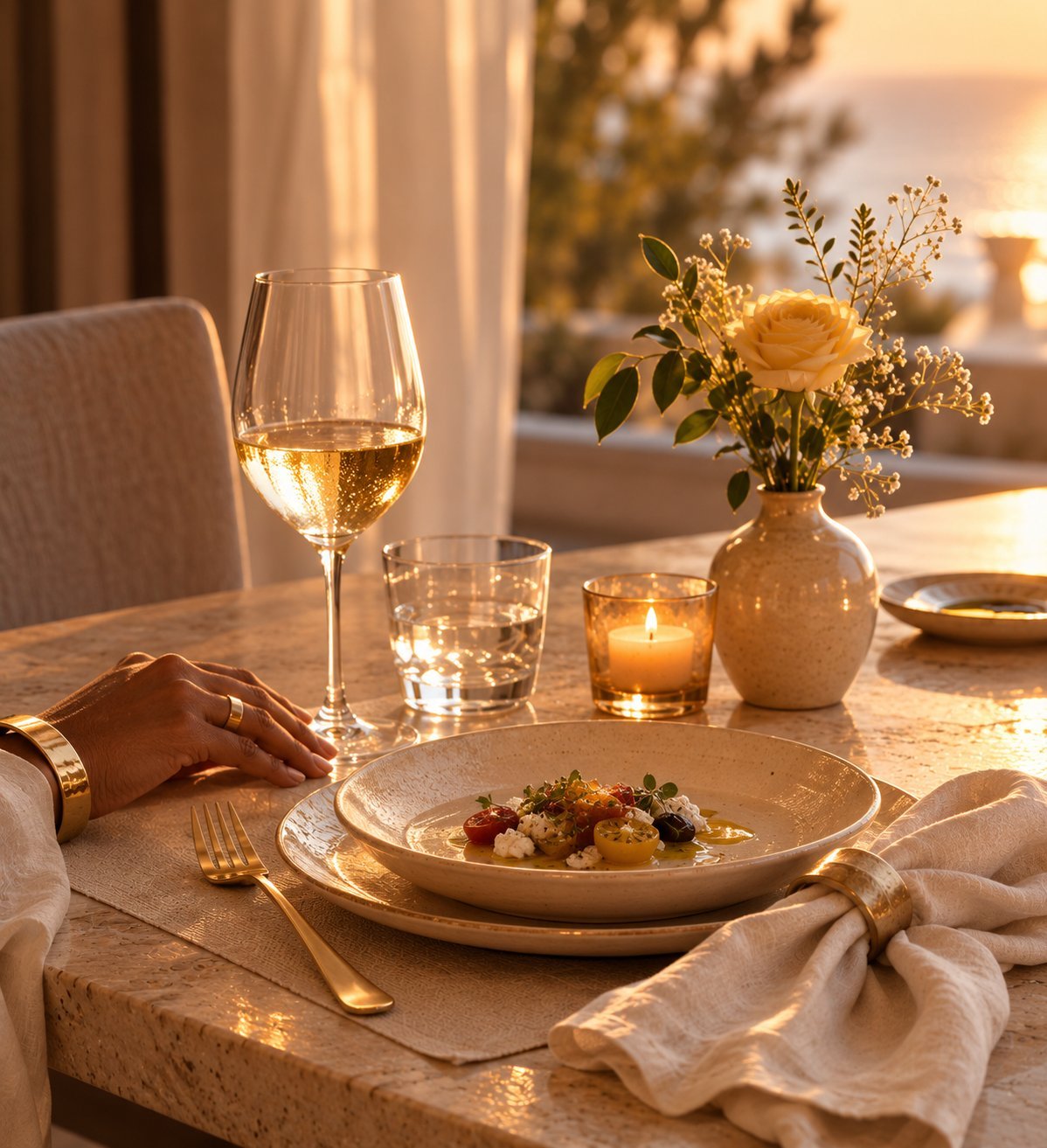
We set a beautiful table for guests. We eat standing over the sink when we are alone.
What would change if you set the table for yourself?
Not as a performance — no one is watching. As devotion. The linen napkin for one. The meal on the good plate. The glass you were saving. The small vase, even for a single stem.
The way you treat yourself when no one is watching is the truest measure of what you believe you are worth. A table set for one is a quiet declaration of an answer.
Receiving Without Returning
Many women can only accept beauty or care if they can immediately repay it. A gift must be matched. A compliment is deflected before it lands. A kindness creates a small, private debt.
To receive without returning — to simply let something be given to you, and to keep it — is a practice.
Let the compliment land. Let yourself be cared for. Accept the beautiful thing without calculating what you now owe. Beauty received without an invoice. This, too, is part of the art of living: allowing your life to be good to you, without needing to earn it back.
Journaling as a Way of Hearing Yourself
We are surrounded by noise about who we should be. Advice. Comparison. The endless commentary of other people's lives.
Journaling is not a productivity system, and it is not a performance. It is a way of hearing your own voice again, underneath the others.
A few honest sentences in the morning. Not to achieve anything. Simply to listen. Because self-trust begins with being able to hear what you actually think — before you decide whether it is allowed.
The Art of Living Is Not Consumption
Here is the caveat that keeps all of this honest: the art of living well is not something you can buy.
It is often mistaken for a shopping list — the linen sheets, the ceramics, the perfume, the far-away trip. The internet calls this "romanticising your life," and the phrase can sound frivolous. But underneath it is something real, and it is not for sale.
You cannot purchase presence. The beautiful life is not a collection of objects; it is a quality of attention. A woman with very little who notices the light is living more artfully than a woman surrounded by beautiful things she never truly sees.
Beauty is not the acquiring. It is the noticing.
Beauty Can Regulate the Pace of a Life
There is a reason a beautiful ritual feels steadying, and it is not only aesthetic.
Beauty asks you to slow down. You cannot rush and truly notice at the same time. To arrange the flowers, to taste the tea, to set the table, to feel the fabric — each of these gently applies a brake to a life moving too fast.
In this way, beauty is not decoration. It is regulation — a way the nervous system remembers it is safe to be here, in this moment, in this body, in this ordinary and singular day.
What Quiet Luxury Means at StormLife
Quiet luxury is usually marketed as expensive things without visible logos. At StormLife, we mean something else entirely.
We mean a life that does not need to announce itself. Sovereignty that is not performed for an audience. Beauty kept for its own sake rather than for the image of it.
The quietest luxury is not a garment or an address. It is a woman at peace in her own ordinary day — unhurried, present, and no longer waiting for permission to enjoy her life.
A One-Minute Art of Living Practice
Use the Beautiful Thing.
Find one beautiful thing you have been saving — the perfume, the candle, the good plate, the silk robe, the pen, the cup kept for guests.
Use it today. Not for an occasion. The occasion is this ordinary day.
Notice the small resistance that says save it for something special — and let yourself have it now. You are the something special.
Your Ordinary Life Is the Practice
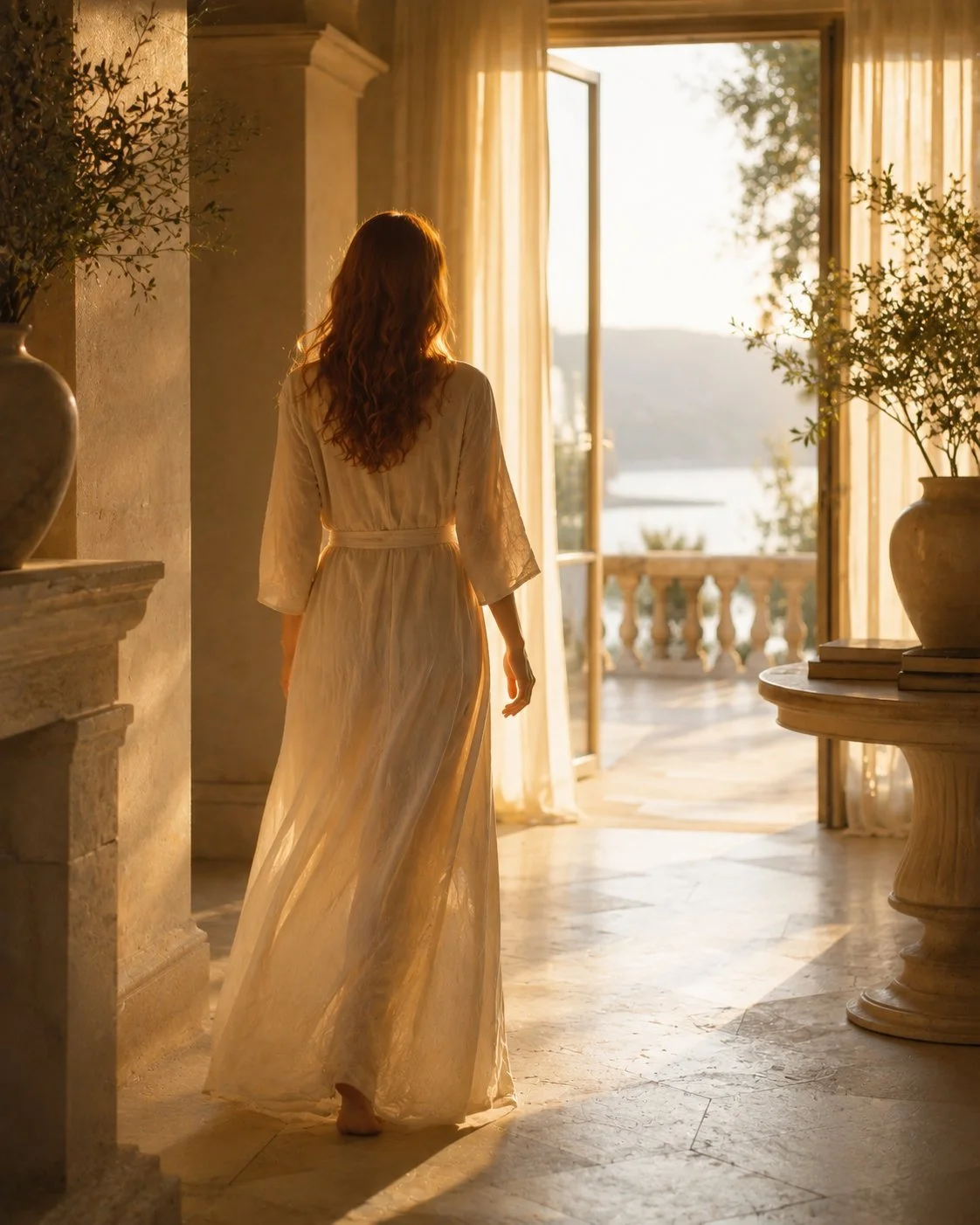
You do not need to travel anywhere to begin. The art of living well is practised in your own kitchen, your own light, your own morning. It is not somewhere else. It has been here the whole time.
For some women, a journey becomes the place they first give themselves permission — the distance makes the beauty easier to receive. But the practice was always meant to come home with you. A life you only live beautifully on holiday is not yet a beautiful life.
The invitation is to make the ordinary sacred, wherever you already are.
Begin With One Beautiful Thing
You do not have to romanticise your entire life today. That, too, would only become another standard to fail.
Choose one thing. One flower. One slow cup. One beautiful object used rather than saved. One table set for yourself. Then let it be enough.
If this way of living calls to you, you can keep practising it with us inside the Sovereign Circle, explore what it means to lead your life from your own authority, or — when the time is right — discover how these principles become an embodied experience on the Sovereign Queen Immersion in Egypt.
You do not have to earn a beautiful life. You only have to stop postponing it.

