
You Are Not a Project: The Practice of Remembering Who You Already Are
There is an entire industry built around the premise that there is something wrong with you.
Something to improve.
Heal. Optimize. Correct. Upgrade. Become.
A better body. A better morning routine. A better relationship. A better mindset. A better version of yourself.
Even personal growth — the beautiful, necessary work of understanding ourselves — can quietly become another place where a woman learns to regard herself as unfinished.
I will finally be enough when…
When I heal this. When I lose that. When I become more confident. When I stop being afraid. When I accomplish the next thing. When I finally become the woman I know I could be.
But what if the premise is wrong?
What if you are not a project?
What if the deepest transformation is sometimes not becoming someone new — but remembering who you were before you learned who you were supposed to be?
That question sits at the center of StormLife.
How Women Learn to Leave Themselves

Most women do not wake up one morning and consciously decide to abandon themselves. It happens gradually.
We adapt. We become useful. Capable. Reliable. Agreeable. Successful. Needed.
We learn what earns approval. What keeps the peace. What makes the family work. What the profession rewards. What a partner needs. What motherhood requires. What leadership expects. What aging supposedly means.
And adaptation itself is not the enemy. It is part of being human.
The problem comes when we become so fluent in the roles we perform that we can no longer hear the woman underneath them.
You can build a very successful life that way.
And one day, perhaps while standing in the kitchen or sitting alone in a hotel room or looking out of an airplane window, a strangely simple question appears: Where did I go?
Not because your life is necessarily wrong. Because somewhere inside the life you built, you became difficult to hear.
The Woman You Were Before the World Became So Loud
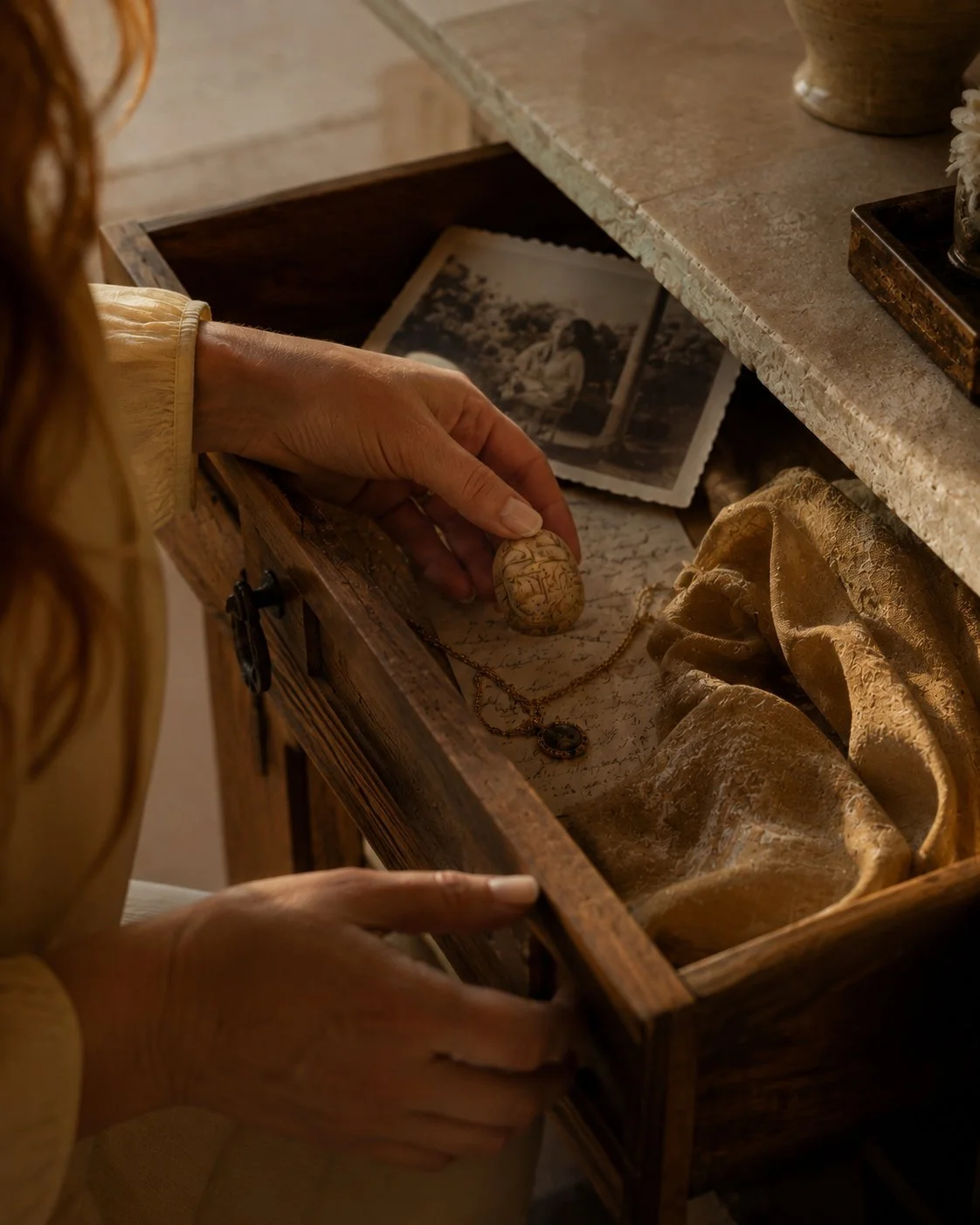
Think back — not necessarily to childhood, but to a version of yourself before certain compromises became automatic.
What did she love? What made her curious? What did she wear before she began dressing primarily for appropriateness? Where did she want to go? What did she know before she learned to second-guess herself? What made her laugh? What did she create simply because she wanted to? What did she imagine her life might contain?
The point is not nostalgia. You are not trying to return to a younger version of yourself.
She didn't know what you know. She hadn't survived what you have survived. She hadn't loved whom you have loved. She hadn't built what you have built. She hadn't become you.
Remembrance does not ask you to go backward. It asks: What was true then that may still be true now?
You Do Not Need to Become Her
There is a phrase I hear often in the world of transformation: Become the woman you were meant to be. It is beautiful.
And yet I want to offer something slightly different. What if she isn't waiting somewhere in the future? What if she is already here?
Beneath the habits. Beneath the expectations. Beneath the years of being who everyone needed. Beneath the roles. Beneath the accomplishments. Beneath even the story you have learned to tell about yourself.
Perhaps the work isn't constructing her. Perhaps the work is removing what made her difficult to recognize.
At StormLife, this is why we say: You were never meant to become the Queen. You came to remember that you already are.
Queen is not a title here. It is not superiority. It is not hierarchy. It is not a costume. It is a metaphor for self-possession. A woman at home within herself.
Remembrance Is Not the Rejection of Growth
This distinction matters. Saying you are not a project does not mean: There is nothing to learn. There is nothing to heal. There are no habits to change. There are no apologies to make. There is no responsibility to take. There are no skills to develop. There are no parts of ourselves we need to understand more deeply.
Growth matters. But there is a profound difference between growth rooted in curiosity and growth rooted in inadequacy.
One says: I am broken. I need to become worthy.
The other says: I am worthy. And because I value my life, I am willing to grow.
Those two journeys can look almost identical from the outside. Inside, they feel completely different.
Midlife Can Be a Return, Not a Crisis
There comes a point in many women's lives when the structures that once defined them begin to loosen. Children need us differently. Careers change. Relationships evolve. Bodies change. Parents age. Ambitions that once felt urgent become less interesting. Things we tolerated become harder to tolerate. Things we postponed become harder to postpone.
The culture often describes this period as crisis. But perhaps some of it is clarity.
There can be a moment when a woman realizes she has fewer years ahead than behind — not morbidly, but honestly. And suddenly the question changes. It is no longer: What should I do with my life? It becomes: What do I want to do with the life that is actually mine?
That question can rearrange everything. Not because she is falling apart. Because she is becoming less willing to live at a distance from herself.
The Difference Between Reinvention and Remembrance

Reinvention says: I am going to become someone different.
Remembrance asks: What have I stopped allowing myself to be?
Sometimes reinvention is exactly what is needed. Move countries. Start the company. Leave the career. Cut the hair. Take the trip. Begin again.
But the most visible change is not always the deepest one. A woman can reinvent her entire exterior and carry the same relationship with herself into the new life.
Remembrance works from the inside outward. She may change everything. She may change almost nothing. The point is not novelty. The point is congruence.
Does the life outside increasingly resemble the truth inside?
Your Desire Is Information
One of the first things remembrance restores is desire. Not impulsivity. Not entitlement. Desire.
Many women are extraordinarily clear about what everyone around them wants. Ask what they want, and the answer becomes strangely complicated. What would work? What is responsible? What can I afford? What will everyone think? What makes sense? What won't inconvenience anyone?
Those may all be important questions. But they are not the first question. The first question is simply: What do I want?
You don't have to act on the answer. You don't have to defend it. You don't have to make it practical yet. Desire is information. It tells you something about the direction in which your life is trying to move.
Sometimes sovereignty begins with nothing more dramatic than allowing yourself to know the answer.
Your Body Often Knows Before Your Explanation Does
There are moments when the body responds before the mind has constructed its argument. Expansion. Contraction. Relief. Tension. Energy. Fatigue. A sense of opening. A quiet internal no.
This does not mean every sensation is infallible intuition. Fear has a body. History has a body. Trauma has a body. Excitement has a body. Discernment matters. But so does listening.
The sovereign woman does not hand every decision to sensation. Nor does she dismiss her body because it cannot produce a spreadsheet explaining itself. She becomes curious. What is this response trying to tell me?
Remembrance is partly the restoration of that conversation.
The Five Queen Codes Are Already Yours
This is where Cornerstone III completes its philosophical loop. The Queen Codes are not traits we import from ancient women. They are capacities we use their stories to examine within ourselves.
Nefertari — Sacred Worth. You do not become worthy. You remember that worth was never dependent upon output.
Hatshepsut — Authority. You do not wait for someone to confer authority over your own life. You practice trusting the authority already yours.
Hathor — Joy. You do not earn pleasure by finishing everything first. You restore your capacity to receive it.
Cleopatra — Influence. You recognize that intelligence, strategy and desire do not make you less feminine. They belong to you.
Nefertiti — Presence. You stop treating visibility as something for which you must apologize.
Five codes. Not five women to emulate. Five doors back to yourself.
Why We Sometimes Need to Leave Home to Remember
You do not need to travel to find yourself. You are not missing. And Egypt does not contain some mystical version of you waiting beside a temple wall.
But leaving the architecture of ordinary life can create unusual clarity. At home, everything reminds us who we have been. The desk. The schedule. The family roles. The inbox. The routines. The people who know exactly how we usually behave.
Travel temporarily loosens those cues. And suddenly there is space. Space to hear yourself differently. Space to notice what you miss. Space to discover what you don't miss at all. Space to experience being cared for rather than managing. Space to meet yourself without quite so much context.
That is why the Sovereign Queen Immersion takes place in Egypt. Not because Egypt gives you sovereignty. But because there are places that make it difficult to remain entirely asleep to yourself. Standing beneath something that has survived five thousand years has a way of changing the scale of the questions you've been asking.
And Then You Come Home

This may be the most important part. Because eventually, the plane lands. The suitcase gets unpacked. The laundry appears. The inbox is waiting. Someone needs something. The extraordinary environment disappears.
And now the question becomes: What came home with you?
Perhaps you stop apologizing before stating what you want. Perhaps Friday flowers become non-negotiable. Perhaps you close the laptop earlier. Perhaps you finally make the call. Perhaps you leave something. Begin something. Wear something. Ask for something. Say no. Say yes.
Perhaps almost nothing visible changes at first. But you notice that you are present inside your own decisions again. That is embodiment. The transformation was never supposed to remain in Egypt.
Remembrance Is a Practice
We forget. Of course we do. We return to old patterns. We overcommit. We second-guess. We find ourselves saying yes when we meant no. We become busy. We abandon the beautiful morning. We stop buying the flowers. We forget the promise we made ourselves.
This does not mean the work failed. It means we are human.
Sovereignty is not a permanent state you achieve. It is a relationship you return to. Again. And again. And again.
That is why the smallest rituals matter. A journal. A scent. A morning. A boundary. A Sovereign Minute. A question. They become ways of saying: Come back.
A One-Minute Practice of Remembrance
Before I Learned I Should…
Complete this sentence: Before I learned I should ________, I ________.
Don't search for a profound answer. Maybe: Before I learned I should be practical, I painted. Before I learned I should stay quiet, I asked questions. Before I learned I should save the beautiful things, I wore them. Before I learned I should take care of everyone first, I wandered.
Then ask: Is any part of her asking to come home?
One minute. No fixing. Just remembering.
You Are Still Here

Perhaps you have changed careers three times. Raised children. Lost people. Built companies. Loved deeply. Made mistakes. Succeeded. Started over. Taken care of everyone. Become extraordinarily competent at living the life in front of you.
And perhaps some part of you has been quietly waiting beneath all of it. Not a younger you. Not a better you. You.
The woman who still knows what beauty feels like. Who still has desires. Who still wants to be surprised. Who still has places she wants to see. Who still has something to create. Who still knows when something is true.
She does not need to be manufactured. She needs your attention.
There Is No Finish Line
There is no final version of you. No morning when you wake entirely healed, entirely certain, perfectly sovereign and permanently beyond self-doubt. Thank goodness.
A life is alive because it keeps revealing itself.
The invitation is not to finally arrive at yourself. It is to stop leaving yourself behind while you move forward.
And perhaps that is what remembrance really means. Not recovering some lost identity. Not returning to who you were. But becoming increasingly unwilling to live separated from who you are.
So begin wherever you are. With one honest desire. One boundary. One beautiful thing. One decision. One minute.
And when you forget —
remember again.

